The word behind the evening
What duende means in flamenco
Duende is the heightened emotion flamenco audiences wait for. Where the word comes from, what Lorca made of it and how to listen for it at a show.
Reserve your flamenco night ↗Quick answer
Duende, or tener duende, is a Spanish term for a heightened state of emotion and expression, often connected with flamenco. The poet Federico García Lorca theorised it in a lecture in Buenos Aires in 1933. It is not a technique: it is the moment a performance gives the audience chills. Flamenco de Leones uses the word in its own text, saying the duende has left its mark on the space.
A word with a house in it
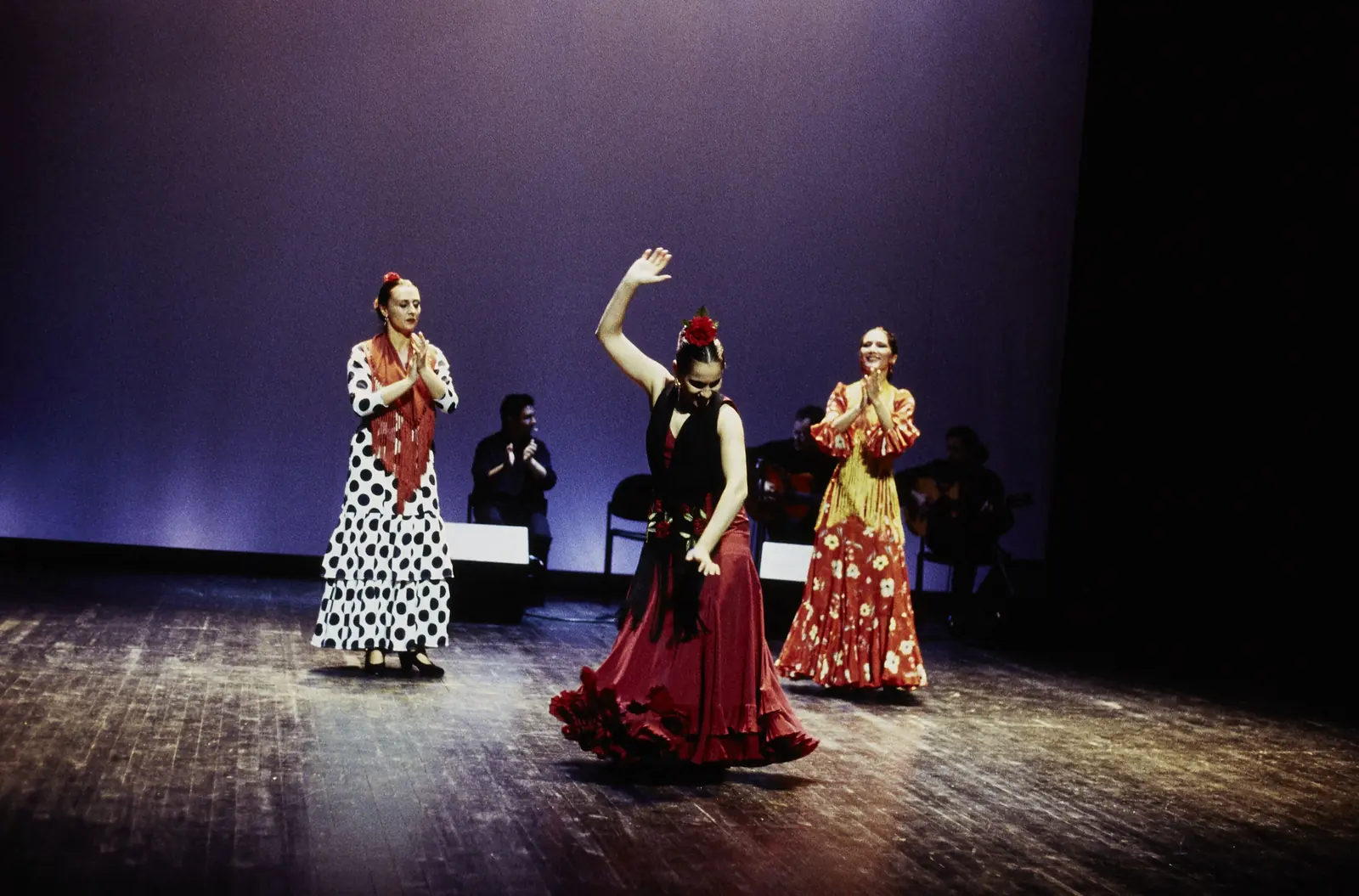
Wikipedia says the term derives from dueño de casa, master of the house, which also inspired the duende of folklore, a household spirit. In flamenco the word names something else: a heightened state of emotion and expression that is often connected with the art. Performers are described as singing, playing or dancing with duende, or as having it, when a performance hits harder than craft alone can explain.
Lorca's lecture
The Andalusian poet Federico García Lorca first developed the aesthetics of duende in a lecture he gave in Buenos Aires in 1933, titled Juego y teoría del duende, or Play and Theory of the Duende. According to Christopher Maurer, who edited and translated it, at least four elements can be isolated in Lorca's vision: irrationality, earthiness, a heightened awareness of death and a dash of the diabolical. Duende, in his lecture, brings the artist face to face with death.
What it feels like to an audience
Wikipedia describes duende as a physical and emotional response to art, the thing that gives you chills or makes you smile or cry as a bodily reaction to a performance that is particularly expressive. It comes from inside, and technique does not produce it. If you feel the hair on your arms rise during a song you do not understand, you have been paying attention to what the word means.
A dictionary version
Wikipedia's article on flamenco quotes the Spanish Academy's dictionary of 1956, which defines the duende in Andalusia as a mysterious and ineffable charm, a charisma that the gitanos call duende. It is a plainer definition than Lorca's, and it makes the same point: the quality is felt, not explained. Both agree that the expressions have duende, or sing, play or dance with duende, are used when a performer reaches that state.
At Flamenco de Leones
The venue's own text uses the word. It says the duende has left its permanent mark on the space through the art, the gaze and the detail of each of its collaborators. A room cannot promise duende, and neither can a booking page, but it can set the scene for it: a stage, a guitar, a singer and a dancer close enough to hear. The show's artists perform traditional and avant-garde flamenco, which suits an evening that is looking for more than a pretty dance.
Read next: Tickets: show, tapas or dinner
How to listen for it
You cannot schedule duende, but you can give it room. Stay quiet during the song, watch the singer's face and the dancer's hands, and let a long silence stay long. When the room reacts with jaleo, the clapping and cries of encouragement, that is often the signal that something has landed. You do not have to understand Spanish for it to work, because the voice and the rhythm carry the meaning.
Read next: Flamenco styles you may hear
Frequently asked questions
Where does the word come from?
Wikipedia says it derives from dueño de casa, master of the house, which also inspired the duende of folklore.
Is duende a flamenco style?
No. It is a quality of emotion in a performance, often connected with flamenco, and not one of the styles.
Who made the idea famous?
Federico García Lorca, in a 1933 lecture in Buenos Aires called Juego y teoría del duende.
Can I count on duende at a show?
No. It cannot be scheduled. A good room, quiet and attention make it more likely.
Sources